News
Greenslopes’ cardiologists implant new world first subcutaneous defibrillator
Jun 12, 2015
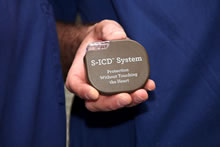
Greenslopes Private Hospital is one of a few Queensland hospitals that has implanted the new world-first S-ICD™ implantable defibrillator system for patients at risk of sudden cardiac arrest.
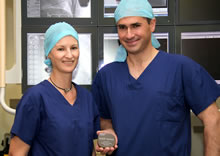
Cardiologists, Drs Karen Phillips and Michael Jones completed their first procedure to implant the new subcutaneous implantable cardioverter defibrillator (S-ICD) at Greenslopes Private Hospital in May this year.
Dr Phillips said that the device has only been available in Australia since late 2014, and is an exciting advancement offering patients a less invasive procedure than the traditional transvenous implantable cardioverter defibrillators (ICDs) in which the leads are fed into the heart through a vein and attached to the heart wall.
“The new defibrillator was a significant advance for patients because the device is implanted just below the skin, and the lead is implanted along the breastbone, just under the skin, rather than through a vein and into the heart, thereby leaving the heart and blood vessels untouched and intact,” Dr Phillips said.
”It is designed to provide the same protection from sudden cardiac arrest as a traditional ICDs, however as there is no direct contact with the heart or bloodstream, it avoids the risk of life-threatening infections that could travel directly to the veins and heart via a traditional ICD lead. There is also a long-term risk that leads in standard defibrillators could fail requiring complex surgery to remove them.”
Dr Michael Jones has recently joined Dr Phillips’ group, Heart Care Partners at Greenslopes Private and brings expertise from Oxford in the UK where he had been performing the new procedure.
“The new device is also a great option for young patients with congenital heart conditions as the leads can be more easily be replaced compared to traditional ICD leads, as these patients grow,” Dr Jones said.
The system has two main components: a pulse generator and a lead. The pulse generator is a small battery-powered device that constantly monitors a person’s heart rhythm and can provide a small electrical shock to restore the heart to normal rhythm when the heart is beating dangerously fast (tachycardia) or chaotically. The electrode enables the device to sense the cardiac rhythm and serves as a pathway for electric shock delivery when needed. Both components are implanted just under the skin—the generator at the side of the chest, and the electrode beside the breastbone. Unlike transvenous ICDs, the heart and blood vessels remain untouched.
Sudden cardiac arrest is an abrupt loss of heart function. Most episodes are caused by the rapid and/or chaotic activity of the heart known as ventricular tachycardia or ventricular fibrillation.
“The S-ICD is constantly monitoring your heart rhythm and is ready to deliver treatment if sudden cardiac arrest or tachycardia occurs, and is suitable for a large population of patients; however it is not intended for patients who have symptomatic bradycardia (a slow heart beat) and who require a pacemaker,” Dr Jones said.